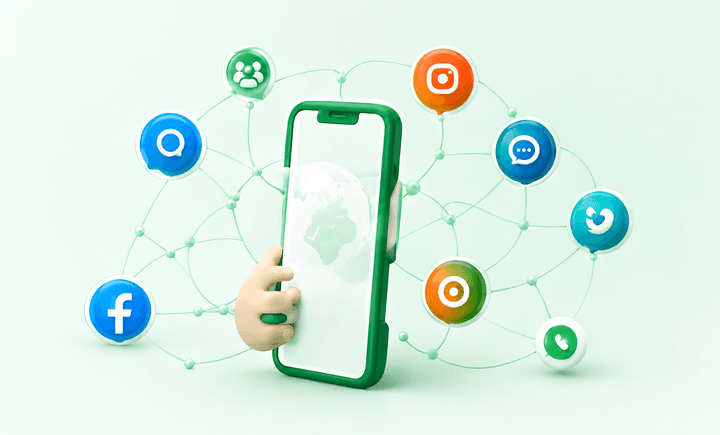
Customers no longer think in channels. They call about a delivery, follow up on WhatsApp, check an email confirmation and message a brand on social media, often all in the same week. To them, it is one relationship with one business. When every channel runs on its own tools and its own data, that relationship breaks into disconnected pieces and customers are left repeating themselves. Omnichannel communication fixes this by connecting every touchpoint into a single, continuous conversation.
Customers do not care which systems your team uses behind the scenes. They care that the conversation picks up where they left off, wherever they choose to continue it.
Omnichannel vs. Multichannel
Multichannel and omnichannel both mean offering more than one way to reach you, but they are not the same thing. A multichannel business might answer calls, send SMS alerts, reply to emails and run a website chat, yet each channel works in isolation, with separate teams, tools and customer records. An omnichannel business connects those channels so they share context. The agent answering a phone call can see yesterday’s WhatsApp thread, an automated SMS reflects the latest order status and a chat that moves to email keeps its history. Multichannel is about being present on many channels; omnichannel is about making those channels work together as one experience.

Being on every channel is multichannel. Remembering the customer on every channel is omnichannel.
Why Customers Expect Continuity
People move between channels based on what is convenient in the moment. A quick question fits a chat or WhatsApp message, an urgent or complex problem often calls for a voice conversation, and receipts and detailed information belong in email. Social media has become a place to ask for help in public, and SMS remains a dependable way to deliver time-sensitive alerts. Because customers use these channels interchangeably, they expect a business to keep up. Having to re-explain an issue, verify their identity again or receive a promotion minutes after complaining tells customers the business is not listening. Continuity turns channel switching from a source of frustration into something customers barely notice, and it builds the trust that keeps them coming back.
The Building Blocks of Omnichannel
A true omnichannel experience rests on four connected foundations. The first is a unified inbox that brings voice, SMS, WhatsApp, email, chat and social conversations into one workspace, so agents are not jumping between tabs and tools. The second is a shared customer profile that links interactions, purchases and preferences to a single record, ideally connected to your CRM, so anyone who helps a customer sees the full story. The third is consistent routing and automation: the same rules decide who handles a conversation and which requests a chatbot or AI agent can resolve, whatever channel they arrive on. The fourth is connected analytics that follow journeys across channels instead of reporting on each one in isolation, revealing where customers get stuck and which paths resolve issues fastest.
How to Roll Out an Omnichannel Strategy
Going omnichannel does not mean switching every channel on at once. The most successful rollouts start with the journeys that matter most, prove the value there and expand from a working foundation. Involve the teams that own each channel early, agree on shared goals and train agents on the new workspace before customers notice any change. Keep consent and privacy front of mind as well: share customer data across channels only in ways customers would reasonably expect, and respect the opt-in and opt-out preferences that apply to each channel.
Use a phased approach to build momentum without disrupting service:
- 1
Audit your channels
List where customers reach you today and where conversations break down.
- 2
Map key journeys
Choose high-impact journeys, such as order support, and trace every touchpoint.
- 3
Unify customer data
Connect channels to one profile and your CRM so context travels with the customer.
- 4
Align routing and automation
Apply the same rules, bots and handoffs across every channel.
- 5
Measure and expand
Track journey outcomes, then bring more channels and teams on board.
Benefits for Customers and Teams
When channels share context, customers get faster, more personal service and teams spend less time chasing information. Agents work from a single view instead of juggling systems, managers can balance workloads across channels and leaders gain a clearer picture of what drives satisfaction and revenue. Over time, those improvements add up to stronger loyalty and more opportunities to grow each customer relationship.
A unified omnichannel strategy delivers value on both sides of the conversation:
Seamless Continuity
Customers switch channels freely without repeating themselves or losing their place.
Faster Resolution
Full context and smart routing get each request to the right answer sooner.
Personalized Service
Shared profiles let every reply reflect the customer’s history and preferences.
More Productive Agents
One workspace replaces constant tab switching, so agents can focus on helping people.
Connected Insights
Cross-channel reporting shows where journeys stall and what to improve next.
Loyalty and Growth
Consistent experiences build the trust that turns satisfied customers into repeat buyers.
The New Standard for CX
Omnichannel communication has moved from a competitive edge to a baseline expectation. Customers want to choose the channel and trust the business to remember them wherever they go. Start with a unified inbox and a shared customer profile, align routing and automation across every touchpoint and measure the complete journey. Build step by step, and every conversation becomes part of one connected, lasting relationship.
Ready to unify your customer conversations?
See how Telvanta.ai brings voice, messaging and chat together in one connected experience.